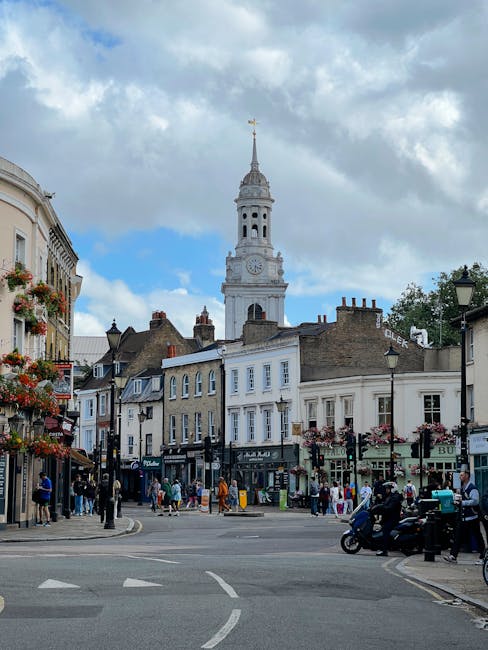
Removals from Chapel Market to Canonbury best local routes
Posted on 06/06/2026
Removals from Chapel Market to Canonbury best local routes: a practical local moving guide
If you are planning Removals from Chapel Market to Canonbury best local routes, you are probably after something very simple: a move that feels calm, quick, and not full of surprises. Fair enough. It is a short journey on the map, but in London, short does not always mean easy. One bad loading spot, a busy school run, or a van that turns up at the wrong minute can make a neat plan feel messy very quickly.
This guide breaks the move down in plain English. We will look at the local routes that tend to work best, how to plan loading and timing, what type of removal setup suits this journey, and the small details that can save a lot of stress. You will also find a checklist, a comparison table, and a few practical pointers that come from real-life moving patterns rather than theory.
For readers planning a broader move in the area, it can also help to skim local removals in Highbury and the wider services overview so you can match the route with the right moving support.

Why Removals from Chapel Market to Canonbury best local routes Matters
Route choice matters more than people expect. Chapel Market sits in a lively, dense part of Islington, with narrow streets, active foot traffic, loading pressure, and the usual London mix of buses, cyclists, delivery vans, and pedestrians who are all trying to get somewhere at once. Canonbury is calmer, but access can still be awkward depending on the exact street, parking controls, and whether your new place is a flat, maisonette, or terraced house with limited outside space.
So why does the route matter? Because for removals, the best route is not just the shortest one. It is the route that gives you the best balance of:
- safe access for the van
- fewer tight turns
- less chance of delay
- better parking or stopping options
- lower risk of damage to items and property
That sounds obvious, but in practice people often focus only on distance. Truth be told, a move of barely a couple of miles can still feel long if the van has to circle for parking or wait behind a queue near a busy junction.
This is why local knowledge matters. For example, if you are moving out during the morning rush, avoiding unnecessary crossing traffic can be the difference between a smooth first load and standing around with a trolley in the rain. Nobody enjoys that. Nobody.
It also helps to understand the kind of property you are moving into or out of. If your move involves stairs, awkward lifts, or period features, you may want to look at flat removals in Highbury and house removals in Highbury for a better sense of how different property types affect planning.
How Removals from Chapel Market to Canonbury best local routes Works
At a practical level, this journey usually works best when you think in three layers: loading point, road choice, and delivery access. That is the whole game, really.
From Chapel Market, the route usually needs to prioritise clear exit roads and manageable turning space rather than trying to shave off a minute or two. Depending on traffic and restrictions, a mover may prefer streets that keep the vehicle away from the busiest market frontage and onto roads where it is easier to get moving without repeated stopping. In the Canonbury direction, the focus usually shifts toward positioning the vehicle so it can unload close to the property without blocking neighbours or triggering parking headaches.
The best local route is not fixed every day. It changes with time of day, roadworks, event traffic, and parking conditions. If a weekday morning looks tight, it may be smarter to schedule the van a little earlier or later. During wet weather, the route itself is only part of the job; you also need to think about how far items must be carried from the vehicle to the front door. A short walk from van to entrance can make a huge difference when you are carrying boxes, mattress bags, or furniture.
For smaller moves, a man and van in Highbury or man with van service often suits this kind of local journey well. If you have more bulky items, or you want protection for larger furniture, a dedicated van or a fuller removal team may be more sensible.
One small but important point: route planning is only as good as the loading plan. If boxes are stacked badly, the best road in the world will not save you from an awkward move. To be fair, that is where a lot of local moving stress starts.
Key Benefits and Practical Advantages
The main benefit of planning the route properly is simple: less friction on moving day. But there are several more specific advantages worth spelling out.
Smoother timing
When the route is chosen with local conditions in mind, you are less likely to hit unnecessary delays. That helps if you are coordinating keys, cleaners, handovers, or building access.
Lower handling risk
Shorter carrying distances and better parking positions reduce the chance of knocks, scratches, and dropped items. A sofa that only needs one careful carry from the van to the door is a very different job from one that has to be passed through a bottleneck of parked cars.
Less disruption for neighbours and passers-by
Good routing helps you load and unload in a more considerate way. That matters in both Chapel Market and Canonbury, where street space can be tight and people notice if a van is blocking the pavement or sitting in the wrong place for too long.
Better for same-day or timed moves
If you are working to a tight key collection or contract deadline, route confidence gives you breathing room. A small delay does not become a bigger one quite so easily.
More accurate pricing expectations
Once the route, access conditions, and likely carrying distance are understood, quotes become more realistic. That is one reason people often benefit from checking pricing and quotes before booking. It helps set expectations properly instead of guessing and hoping.
Expert summary: For this type of local move, the best route is usually the one that protects access, reduces waiting time, and keeps carrying distances short. Speed matters, but access matters more.
Who This Is For and When It Makes Sense
This kind of route-focused planning makes sense for a wide range of moves, especially where the journey is short but the access is not simple. You may need it if you are:
- moving from a flat above a shop or cafe near Chapel Market
- relocating into a Canonbury apartment with restricted parking nearby
- moving student items, boxes, and light furniture
- transferring furniture between rentals
- moving an office or small work unit locally
- handling a same-day move where timing is tight
If your move includes a piano, heavy wardrobe, antique table, or anything awkwardly shaped, specialist handling becomes more important than the road itself. In that case, a service like piano removals in Highbury or furniture removals in Highbury may be the safer route. Yes, even if it is only "just across Islington". That phrase has caused a few headaches over the years.
It also makes sense if you are balancing moving day with work, childcare, or handover deadlines. A route that saves ten minutes may not sound dramatic, but on a busy day it can be the difference between feeling rushed and feeling in control.
And if you need a quick turnaround, there are situations where same-day removals in Highbury can be a practical fallback, provided access and timing are realistic.
Step-by-Step Guidance
Here is a sensible way to handle the move without overcomplicating it.
- Check both addresses properly. Confirm exact flat numbers, entry codes, and whether the vehicle can stop close enough to the entrance.
- Review likely access points. Look for narrow roads, one-way systems, loading restrictions, and places where a van may need to wait safely.
- Choose the route based on access, not just distance. A slightly longer road can be better if it avoids awkward turns or excessive traffic.
- Match the vehicle to the load. If you have more than a few boxes and one bed frame, a simple car run will quickly become unworkable.
- Pack by drop order. Put the things you need first near the door or top of the load. You will thank yourself later.
- Protect furniture properly. Use covers, blankets, and wrapping where needed, especially on corners and fragile surfaces.
- Plan for parking and carry distance. Even a clean route can turn slow if the van has to stop far from the property.
- Leave a little time buffer. London traffic has a way of being just annoying enough to matter, usually at the worst moment.
That is the basic shape of it. Nothing fancy, just disciplined planning.
If you are packing yourself, a good starting point is packing and boxes in Highbury. If you need somewhere to keep items temporarily while access is sorted, storage in Highbury may help bridge the gap.
Expert Tips for Better Results
After enough local moves, a few patterns become clear.
1. Move at a sensible time
Early morning can work well if your road is quieter and the property access is easier. Midday may suit a move where key handover or lift access is the main constraint. Late afternoon can be fine too, but it depends on traffic. There is no magic hour. Just a better one for your route.
2. Treat the van as part of the house move, not an afterthought
People sometimes think the route is separate from the packing. It is not. If the van can get close, and the load is organised by room, the whole day becomes easier.
3. Keep one "first night" bag separate
This sounds simple, but it saves a lot of panic. Put medication, chargers, toiletries, documents, and a change of clothes somewhere obvious. Moving day tends to scatter attention in funny ways.
4. Protect awkward items before you start carrying
Do not wait until the hallway looks full. Wrap mirrors, remove loose shelves, and secure drawers early. It is calmer that way.
5. Stay flexible with the route
Sometimes the planned road is not the best road once you see current conditions. A local mover who knows alternative approaches can adjust on the fly without making the job bigger than it needs to be.
If you are comparing providers, it helps to look at removal companies in Highbury and removal services in Highbury so you can judge whether the support matches the move, not just the postcode pair.

Common Mistakes to Avoid
Most moving mishaps are avoidable. Not all of them, of course. London likes to throw one curveball now and then. But many problems come from the same handful of mistakes.
- Assuming the shortest route is the best route. It often is not, especially with tight access.
- Ignoring parking restrictions. A van can arrive on time and still lose the day if it cannot stop legally or safely.
- Packing heavy boxes too full. That makes carrying harder and increases breakage risk.
- Forgetting elevator or stair constraints. These can be the real time sink, not the road itself.
- Leaving furniture unprotected. Small scuffs become annoying very quickly.
- Underestimating loading time. Especially with books, kitchenware, or lots of small bags.
- Not checking building rules in advance. Some properties have specific move-in times or access instructions.
A surprisingly common one is this: people book the van, then only later realise the sofa will not fit through the turn at the top of the stairs. That is when the coffee starts going cold and everyone suddenly becomes very quiet.
Tools, Resources and Recommendations
You do not need a giant toolkit to manage this move, but the right basics matter.
- Boxes in mixed sizes: small for heavy items, larger for light bedding and soft goods.
- Labels and a marker: simple, clear room labels save time on arrival.
- Furniture covers or blankets: especially useful for tables, wardrobes, and headboards.
- Tape and scissors: ideally kept in a small "day of move" pouch.
- Cleaning cloths: helpful for both old and new properties.
- Phone charger and power bank: because your battery always seems to run low at the wrong moment.
From a service standpoint, it can be useful to compare a few approaches:
- man with a van in Highbury for smaller loads and flexible local runs
- man and a van in Highbury when you need practical help loading as well as transport
- removal van hire in Highbury if you are managing parts of the move yourself
- man with van support if the route is local but access is a bit fiddly
You may also want to review the Highbury Fields removals guide for garden apartment moves if your property access shares similar challenges around ground-floor entry, steps, or outdoor carry routes.
Law, Compliance, Standards, or Best Practice
For local removals, the legal and compliance side is usually straightforward, but it should never be treated casually. Best practice matters because moving involves lifting, transport, property access, insurance cover, and the handling of personal belongings. That means a responsible mover should pay attention to safety, security, and reasonable care at each stage.
In the UK, it is normal to expect clear terms, fair handling of goods, and sensible communication about what is and is not included. If a company is handling your possessions, you should understand the basics of their process, including what happens if access is difficult, an item is damaged, or timings change. It is also sensible to check that policies are in place for insurance and safety, because even careful teams need a plan for the unexpected.
From a workplace perspective, moving teams should use safe lifting practices and appropriate equipment. That is not just about avoiding injuries. It is also about protecting your belongings and your property. A rushed lift through a narrow hallway is where small accidents happen.
There is also a customer-service side to this. Clear booking terms, payment security, privacy handling, and complaints procedures are all signs that a provider takes its responsibilities seriously. If you like to check the small print, terms and conditions, payment and security, privacy policy, and complaints procedure are the kind of pages that help build confidence before you book.
For businesses and renters handling waste responsibly after a move, it can also help to consider recycling and sustainability practices. Small decisions, like separating reusable packing materials, can make the clean-up less wasteful.
Options, Methods, or Comparison Table
Different move types suit different levels of help. Here is a simple comparison to make the choice clearer.
| Option | Best for | Strengths | Watch-outs |
|---|---|---|---|
| Man with a van | Small local moves, a few rooms, lighter loads | Flexible, usually quicker to arrange, good for short routes | Limited for large furniture or very complex access |
| Man and a van | Moves needing loading help as well as transport | Useful balance of support and practicality | May still be tight for heavy or fragile specialist items |
| Full removals service | Family homes, bulky furniture, larger inventories | More hands, more planning support, less stress | Can be more than you need for a small Chapel Market to Canonbury move |
| Self-managed hire or DIY approach | Very small loads, confident movers, flexible timing | Can be cost-effective if everything is simple | Heavier physical work, higher risk of damage, more time pressure |
For a short urban route, many people land on a van-based service with loading support. It is often the sweet spot. Not always, but often.
Case Study or Real-World Example
Imagine a one-bedroom flat move from near Chapel Market to a Canonbury apartment. Nothing outrageous: a bed, chest of drawers, two shelving units, a sofa, a dining table, kitchen boxes, clothes, and a few fragile items. On paper, it sounds like an easy half-day job.
But then the details start appearing. The old property is above street level, the building entrance is shared, and the van cannot sit directly outside for long. The new place has a narrow approach road and limited stopping space. If the moving plan focuses only on distance, things get messy fast.
The better approach is to plan the route so the van spends less time circling and more time parked where loading is efficient. That might mean choosing a road with slightly easier access, arriving before the busiest part of the day, and pre-grouping boxes so the first unload is the most important one. In a real move like this, the job usually feels much calmer when the team knows exactly which item goes first and where the van can safely wait.
One useful habit is to build the move around the hardest item, not the easiest one. If the sofa fits, everything else probably follows. If the sofa does not fit, well, that is the sort of discovery that ruins an afternoon.
For students or renters with lighter loads, student removals in Highbury can be a sensible fit, especially where time and budget are both tight. For larger household moves, house removals in Highbury may be the better choice.
Practical Checklist
Use this before moving day. Simple, but effective.
- Confirm both full addresses and postcodes
- Check access at both properties, including stairs and lifts
- Decide the best loading and unloading point
- Reserve parking or understand local stopping limits where possible
- Measure large furniture against doorways and stair turns
- Pack fragile items separately and label them clearly
- Keep documents, keys, and chargers in one safe bag
- Protect furniture edges and glass surfaces
- Allow a time buffer for traffic or access delays
- Have a plan for items going into storage, if any
- Check booking details, payment terms, and insurance cover
- Walk through the route mentally from van to front door one last time
If you want a more complete overview of the process before you book, the wider removal services in Highbury page is a useful place to compare what level of support fits your move.
Conclusion
For Removals from Chapel Market to Canonbury best local routes, the real win is not finding the fastest road on a map. It is choosing the route that gives your move the cleanest access, least stress, and most predictable timing. When you match the route to the property layout, parking reality, and the size of your load, the whole day becomes easier to manage.
That is especially true in London, where a move can look simple and then suddenly ask for patience, flexibility, and a bit of common sense. Get those three things right, and most of the friction drops away. Not all of it. But most of it.
If you are still deciding how much help you need, reviewing removal companies in Highbury, man with van support, and the relevant pricing and quotes information can make the next step feel much clearer.
Get a free quote today and see how much you can save.
And if all you need is a steady, local move with less drama and more control, that is absolutely achievable. One careful route at a time.